Gallery
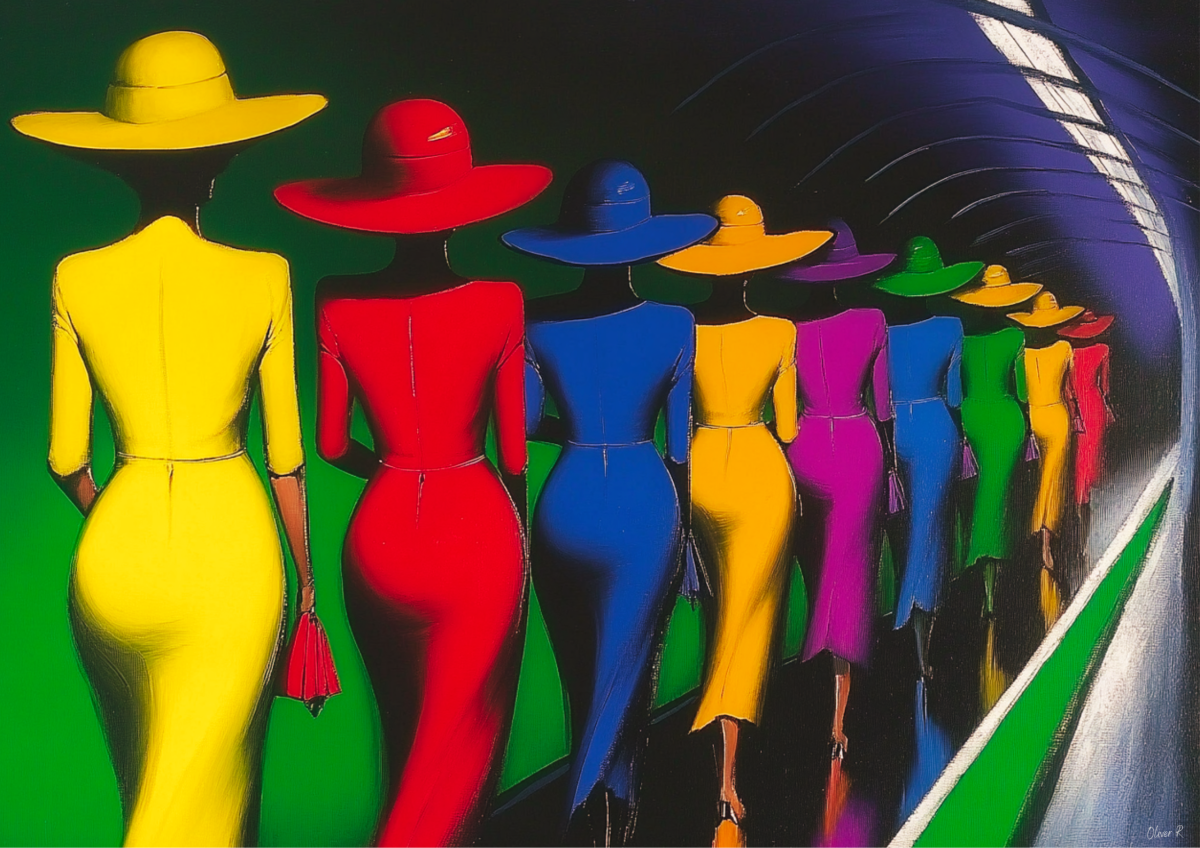
"Les Parisiennes" signed by "Oliver R"
Les Parisiennes
— Elegance in motion in the Paris metro In his work “Les Parisiennes,” contemporary artist Oliver R captures the essence of urban, refined, and timeless femininity with finesse and modernity. The painting depicts a group of women seen from behind, walking through a Parisian metro corridor. They are all wearing plain dresses in bold colors—red, blue, yellow, green—contrasting with the sobriety of the underground setting. Their elegant hats complete a graceful silhouette, evoking fashion, discretion, and typical Parisian sophistication.
Discreet elegance in an everyday setting
-- Oliver R chooses an ordinary place, the subway, symbol of the frantic pace of city life, to infuse it with unexpected visual poetry. The women, although seen from behind, exude a strong presence: their postures, the fluidity of the fabrics, and the repetition of silhouettes create a silent choreography. This staging transforms the mundane into art, the everyday into elegance.
Play of colors and light
--The choice of solid colors brings visual harmony and an almost graphic dimension to the whole. The contrast between the vivid dresses and the neutral tones of the hallway evokes the duality of Paris—a city that is both gray and luminous, ordinary and exceptional. Oliver R plays with reflections, shadows, and the perspective of the hallway to draw the viewer's gaze toward another place, perhaps an exit, a promise of light at the end of the tunnel.
A celebration of style and modernity
--“Les Parisiennes” is part of Oliver R's approach to magnifying the simplicity of reality. By transforming an ordinary urban scene into a tableau of rare elegance, the artist pays tribute to contemporary women—free, stylish, and on the move. This painting, both aesthetic and narrative, becomes a mirror of Parisian modernity, where art and life become one.
Women, contemporary muses
-- By presenting his female figures from behind, Oliver R cultivates mystery: each woman becomes both anonymous and universal. We cannot see their faces, but we can guess at their stories, their emotions, their destinations. This choice gives the work an introspective dimension, inviting each viewer to project themselves into the scene and imagine the lives of these Parisian women.
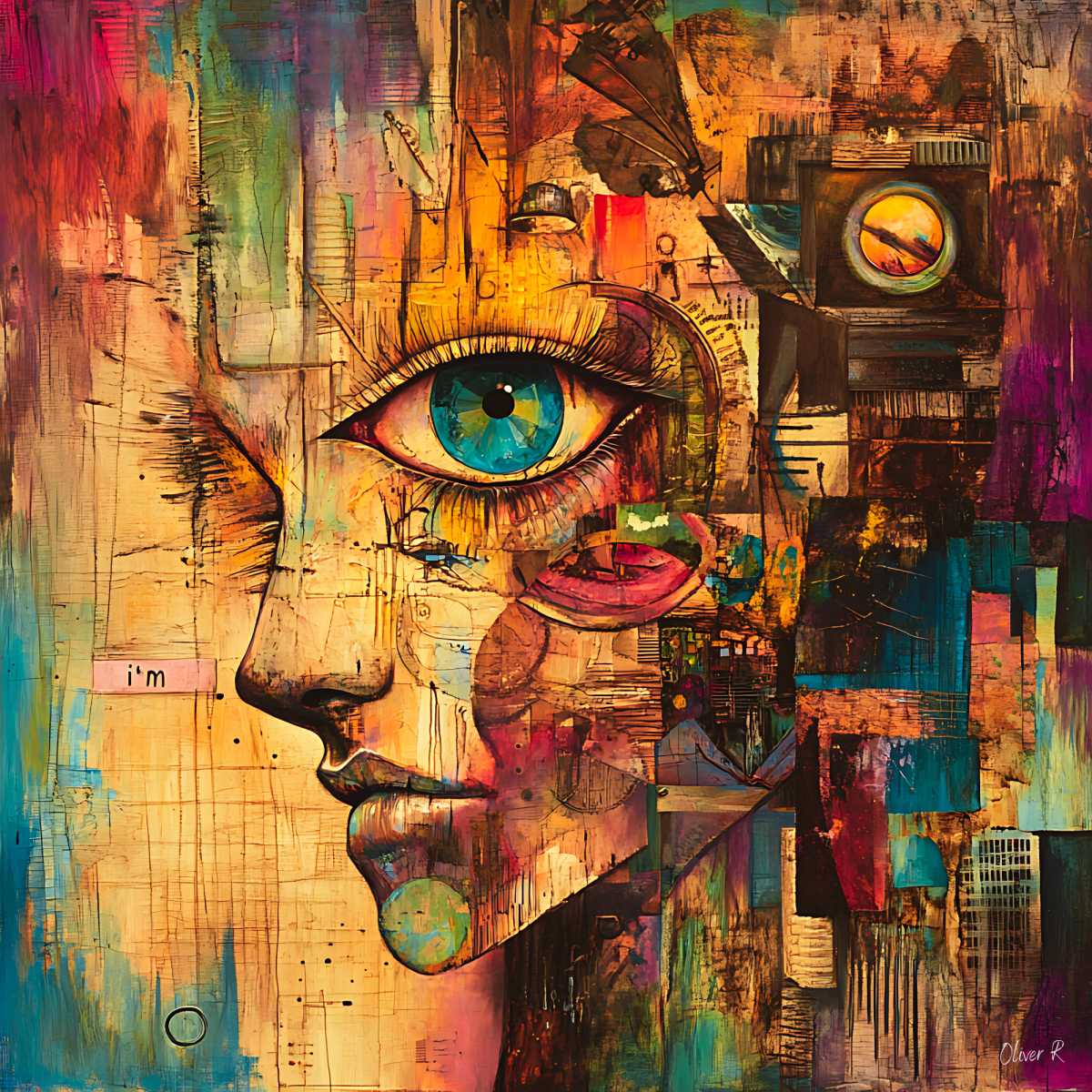
"I'm" signed by "Oliver R"
I create, therefore I am. With this work, Oliver R. emphasizes the importance of creating in order to exist. This work is also important because it is the beginning of a work done around Art Brut.
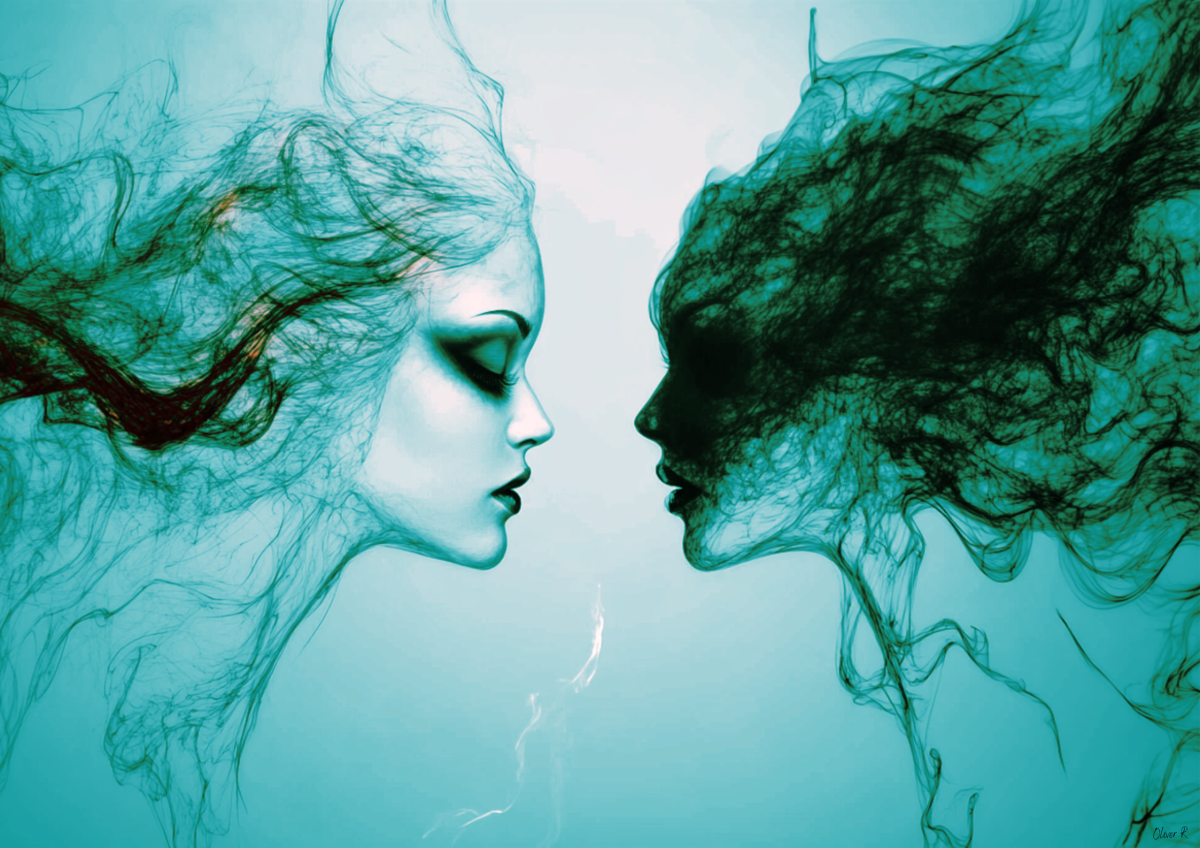
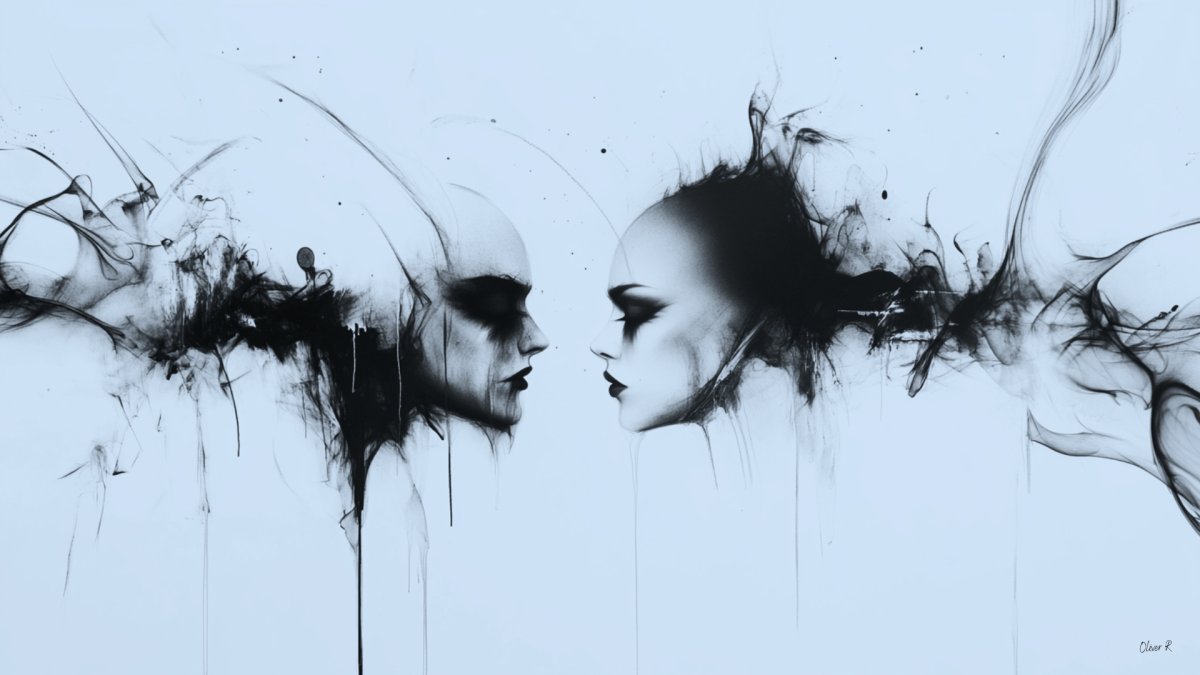
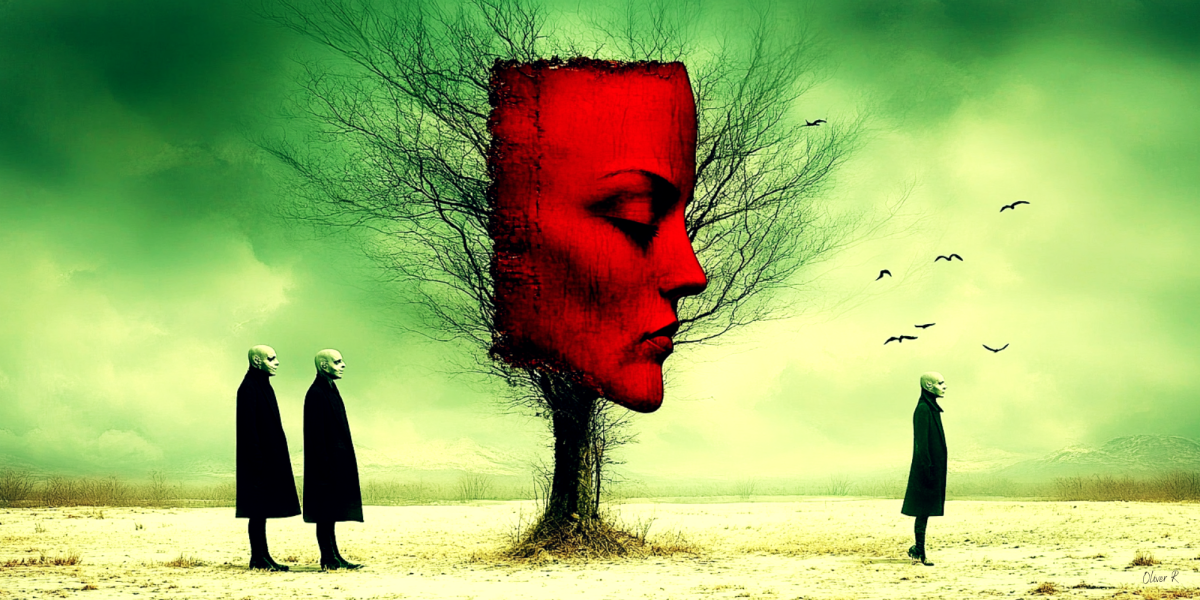
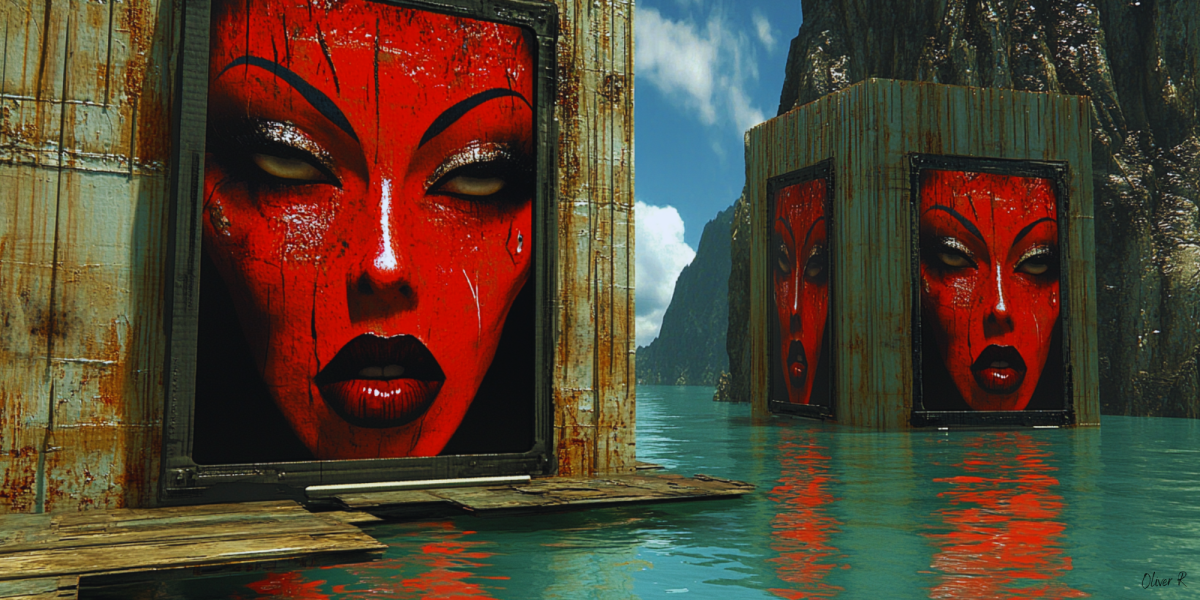
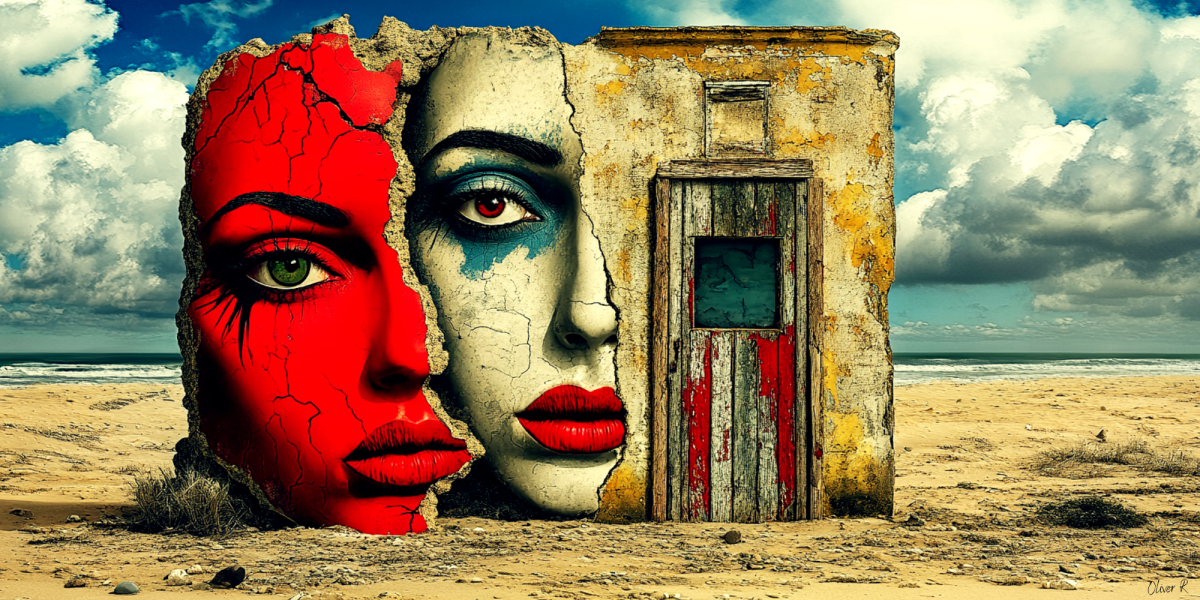
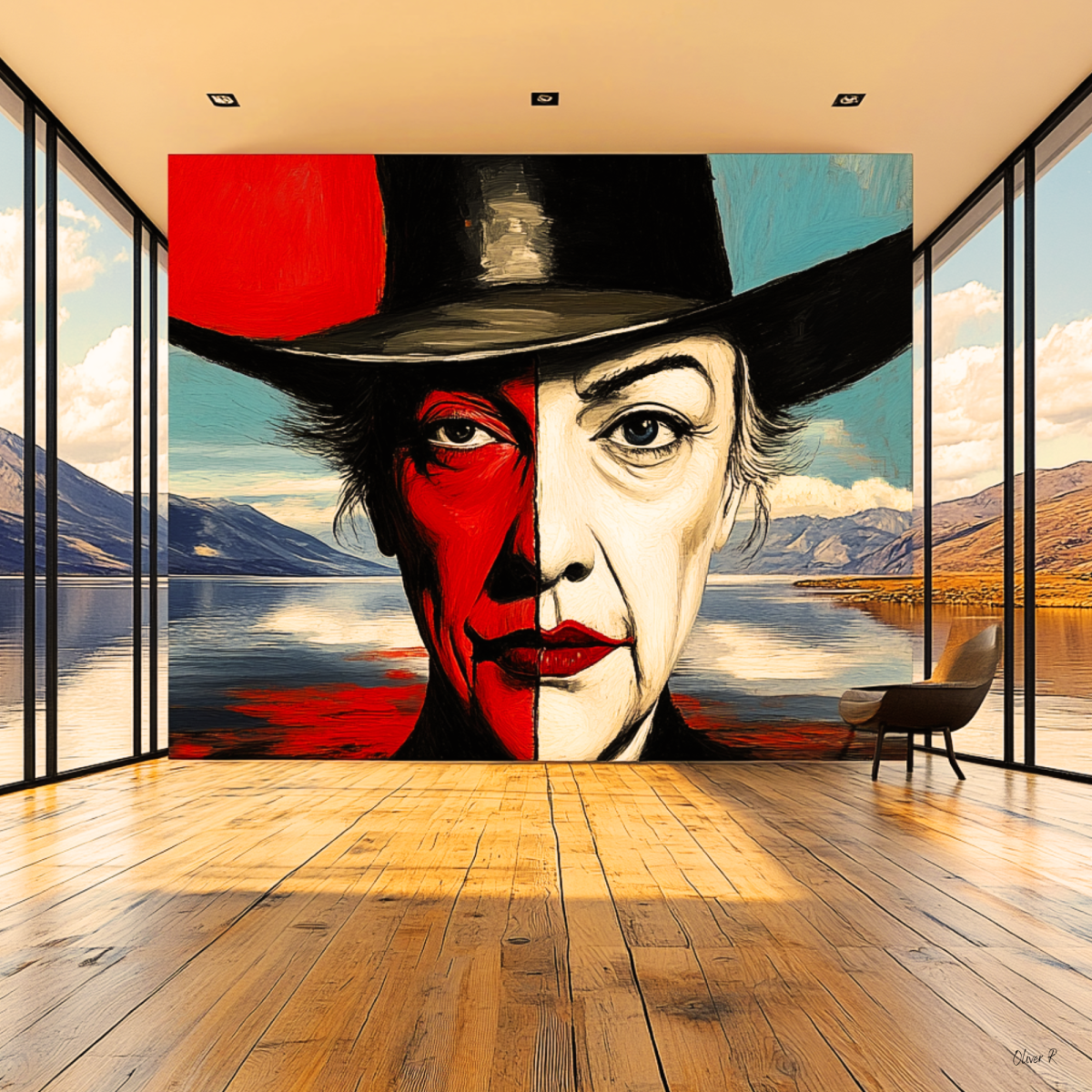
Psychart by Oliver R
Psychart is a work based on the Rorschach test. Like this test, the interpretation is free. (9 artworks on Rarible and Artboxy)
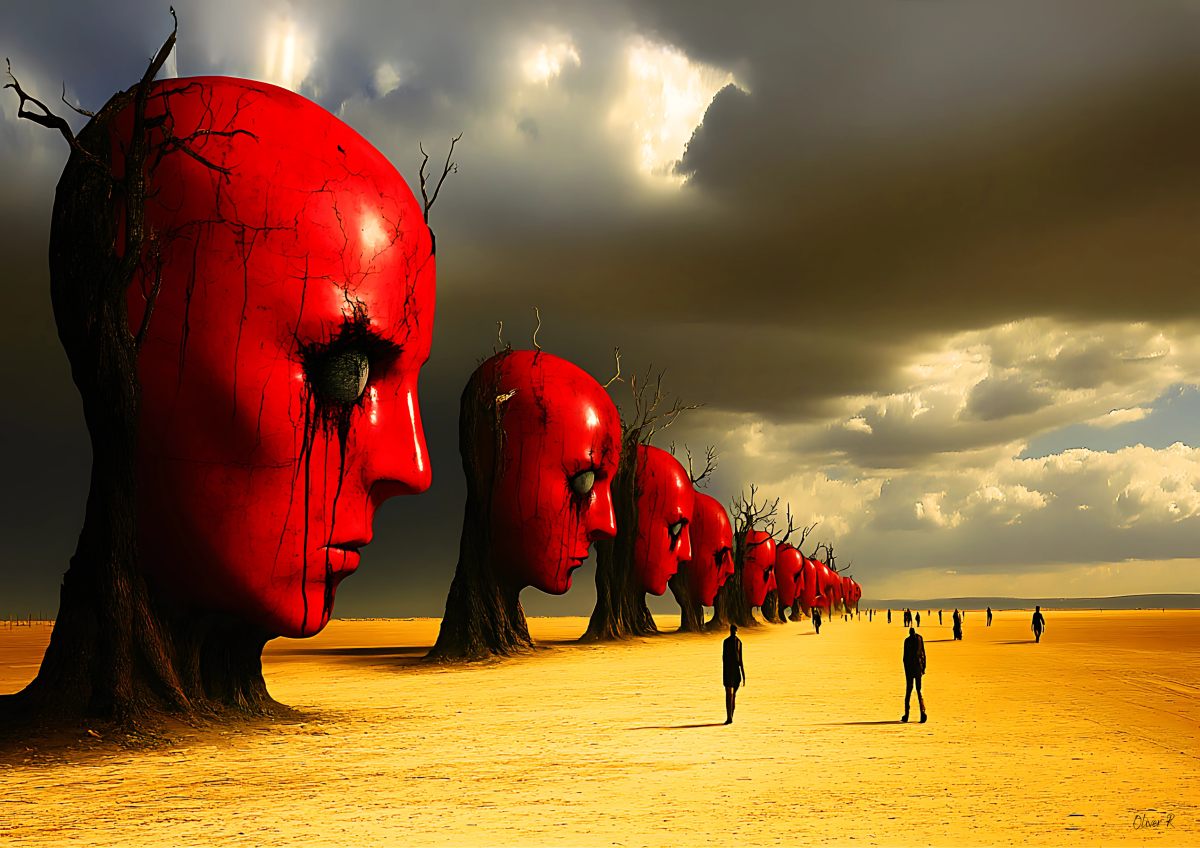
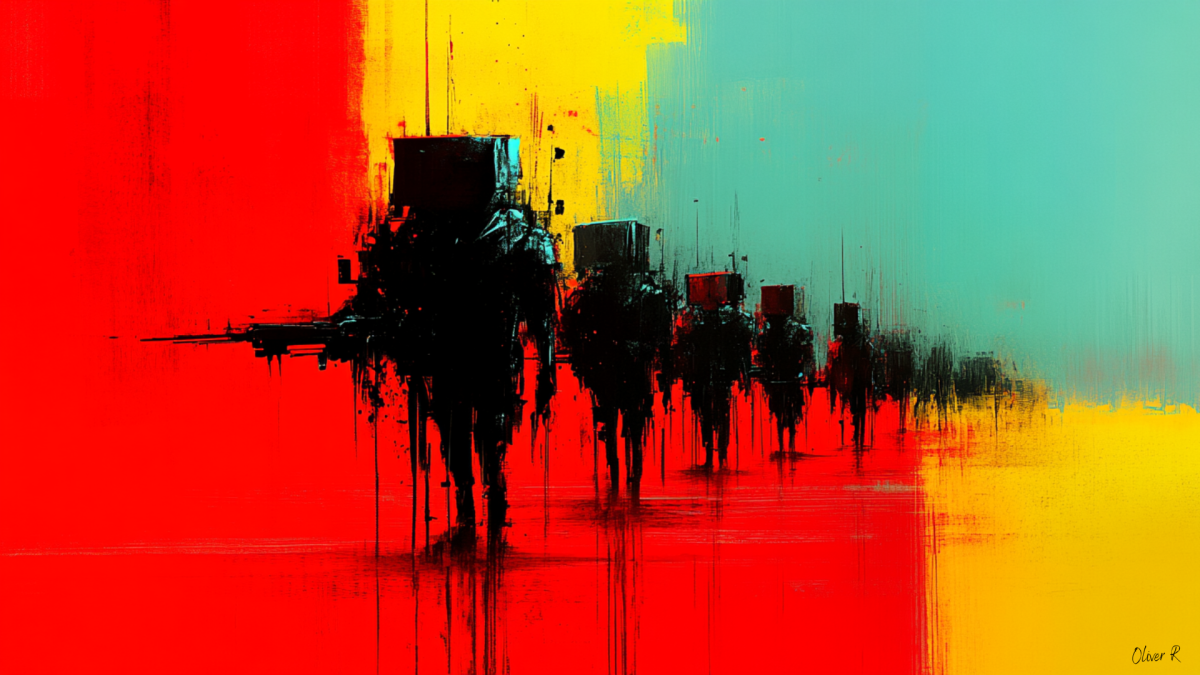
Every human is a tree, every tree is a human. The gaze is lost in the strangeness of a desert landscape where the sand seems to absorb the memory of the world. In the center of this mineral immensity, hybrid figures emerge: red heads, burning like embers, whose necks are rooted in the ground in the form of tree trunks.
These immobile beings, both human and plant, evoke a slow and painful metamorphosis—that of a humanity seeking to graft itself onto a land it has neglected for too long. The color red dominates, vibrant, almost violent. It seems to express life, anger, and the burning sun all at once. These headless figures are frozen witnesses, perhaps survivors of a world in ruins. Their neck-trunks recall the resilience of life, but also its confinement: rooted, unable to flee, these beings contemplate the passage of time in a silent desert. Around them, black silhouettes move slowly.
They appear tiny, almost spectral, as if wandering between the vestiges of a vanished past and the promises of an uncertain future. These figures, absorbed in their walk, embody humanity in motion, continuing to move forward despite the dryness of the world and the shadow of despair. The entire painting exudes a tension between immobility and wandering, fire and silence, life and decay.
It is a work that questions our relationship with nature, memory, and our roots. Far from being empty, the desert here becomes a space for reflection: what remains of us when our roots burn? What humanity emerges when the earth itself becomes foreign?
Through his powerful symbolism and visual contrasts, the painter offers a poignant allegory of the contemporary condition: that of uprooted beings seeking to reestablish a connection with a world they have dried up.
In this tension between the redness of the heads and the blackness of the silhouettes, the painting reflects our own duality: the call of fire and the fear of nothingness.
Each piece is unique, I do not wish to make a series. The work is unique and benefits from a digigraphy certification. You can also acquire the NFT version in addition to the physical work. The work is produced on Hahnemühle Museum Etching 350g paper, protected by a 5mm anti-reflective plexiglass. It benefits from a reinforced retractable frame, and a 0.3 cm dibond support .
"Anna Karénine" signed by "Oliver R"
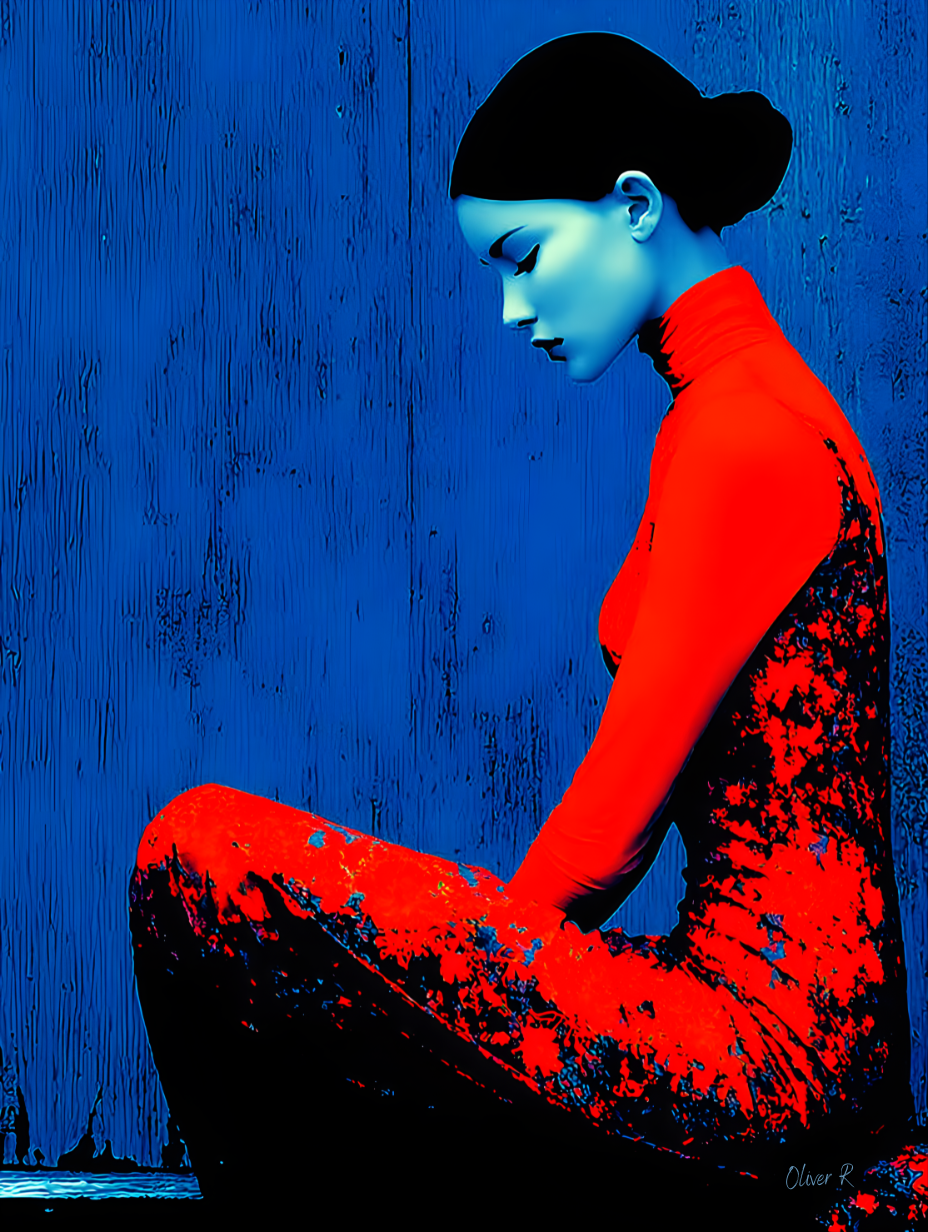
The painting Anna Karenina by Oliver R. is presented in a 9:12 portrait format, enhancing the sense of intimacy and verticality inherent to the human figure.
The composition depicts a woman seated cross-legged, shown in profile, in a posture that is both calm and introspective. This lateral position invites the spectator to observe discreetly, almost as if witnessing a private moment of silent reflection. The woman’s face, pale and delicate, is defined by fine and harmonious features. Her black hair is carefully gathered into a bun, emphasizing the purity of the lines of her neck and profile. This classical hairstyle lends the figure a timeless elegance, evoking both restraint and inner nobility.
The long red dress constitutes the central chromatic element of the artwork. Its scarlet hue, intense and vibrant, contrasts strongly with the pale complexion of the face and the blue background of the painting. The patterns and lacework, blended with the play of shadows, merge into one another, creating subtle touches of black within the fabric. This fusion of ornament and shadow suggests an almost shifting materiality of the dress, as if it absorbs light and transforms it.
Red, a color associated with passion and tragedy, reinforces the implicit reference to Tolstoy’s heroine, a symbol of tormented love and tragic destiny. The background, dominated by a deep blue, hints at a wooden surface whose grooves appear in black. This discreet suggestion of material introduces a spatial and textural dimension without drawing attention away from the main subject.
The implied wood may be interpreted as an enclosed, interior space, almost austere, contrasting with the expressive richness of the red dress. Thus, Oliver R. presents a female figure that is both fragile and powerful. The interplay of colors — scarlet red, cool blue, and subtle black — builds a visual and emotional tension. Anna Karenina is not merely a portrait; it becomes the image of a state of mind, of inner solitude, where posture, color, and light all contribute to a silent narrative.
The painting seems suspended between restraint and passion, between the stillness of the body and the intensity of feeling.
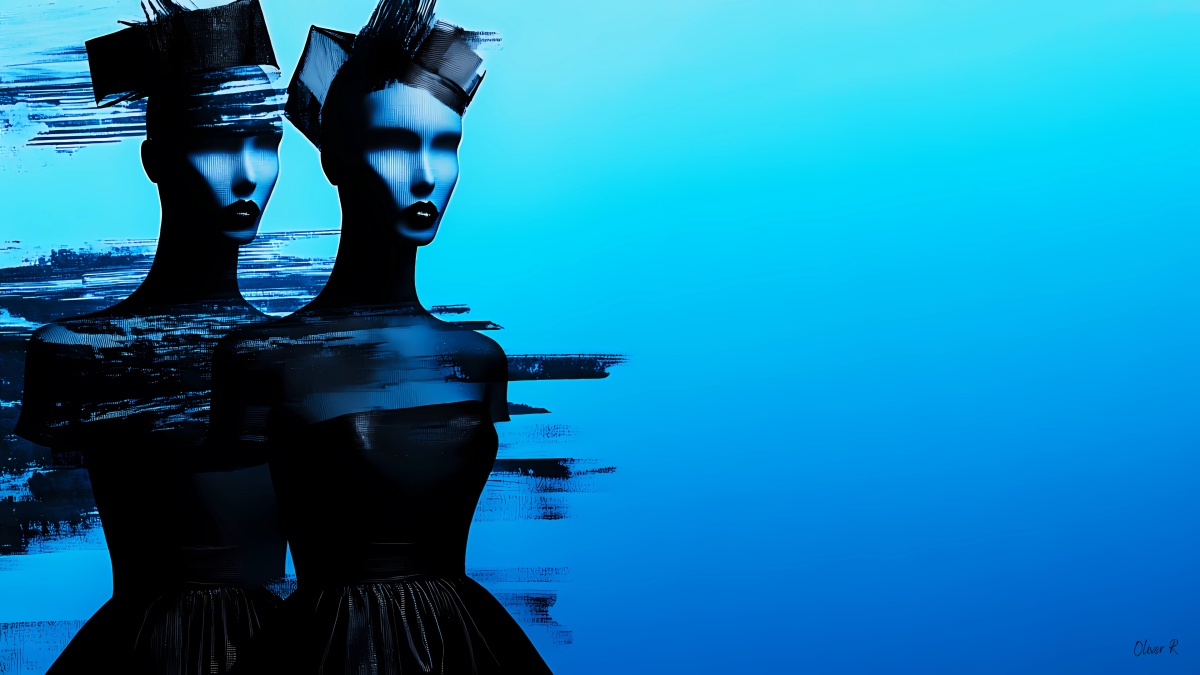
"Women in black" signed by "Oliver R"
Women in Black by Oliver R: The Fragile Presence of the Gesture
In Women in Black, Oliver R presents a painting in which the female figure appears less as a defined subject than as a trace of the pictorial gesture itself. The canvas, dominated by a wide blue background, immediately establishes a calm and deep visual field, almost atmospheric in nature. This expanse of color functions like a silent stage upon which two female silhouettes emerge with remarkable economy of means. Positioned on the left side of the composition, the two women seem to **arise from a few rapid, instinctive black brushstrokes**. The artist does not aim to describe but rather to suggest: the bodies are constructed through fragments, dark masses, and uncertain lines. The black strapless dresses appear as loosely formed shapes, while the small hats—simply indicated—are enough to evoke a discreet, almost theatrical elegance. Yet the true singularity of the work lies in the **relationship between black and blue**. The faces are not truly painted; instead, they emerge from the contrast between the dark strokes and the colored background. This technique creates a visual ambiguity in which the features seem to float, as if revealed by the luminosity of the blue rather than by the materiality of the paint. The figure thus becomes a kind of negative space, a fragile apparition within the painted surface. Around the silhouettes, **streaks and trails of black paint** testify to the physicality of the gesture. These visible marks extend the movement of the artist’s hand and deliberately reject any realistic illusion. They remind the viewer that painting is not only representation but also **a material event**, a moment captured on the surface of the canvas. This tension between figuration and abstraction places *Women in Black* within a pictorial tradition in which the motif serves primarily as a **pretext for exploring the language of painting itself**. The women are not individualized; they function almost like signs. Their presence—both asserted and incomplete—suggests silhouettes in the process of becoming, suspended between appearance and dissolution. The deep blue background, in contrast with the density of the black, intensifies this sense of undefined space. It surrounds the figures without stabilizing them, creating an atmosphere of distance and mystery. The two women seem to stand within an uncertain territory, somewhere between a worldly scene—hinted at by their dresses and hats—and an abstraction in which only the energy of the gesture remains. With *Women in Black*, Oliver R reminds us that contemporary painting can still find its strength in **the radical simplicity of gesture and contrast**. The work seeks neither narrative nor precise description; instead, it privileges visual intensity and the tension between presence and disappearance. It is precisely within this economy of means that its expressive power resides: two silhouettes, a few black traces, a field of blue—and yet an entire space of interpretation opens before the viewer.
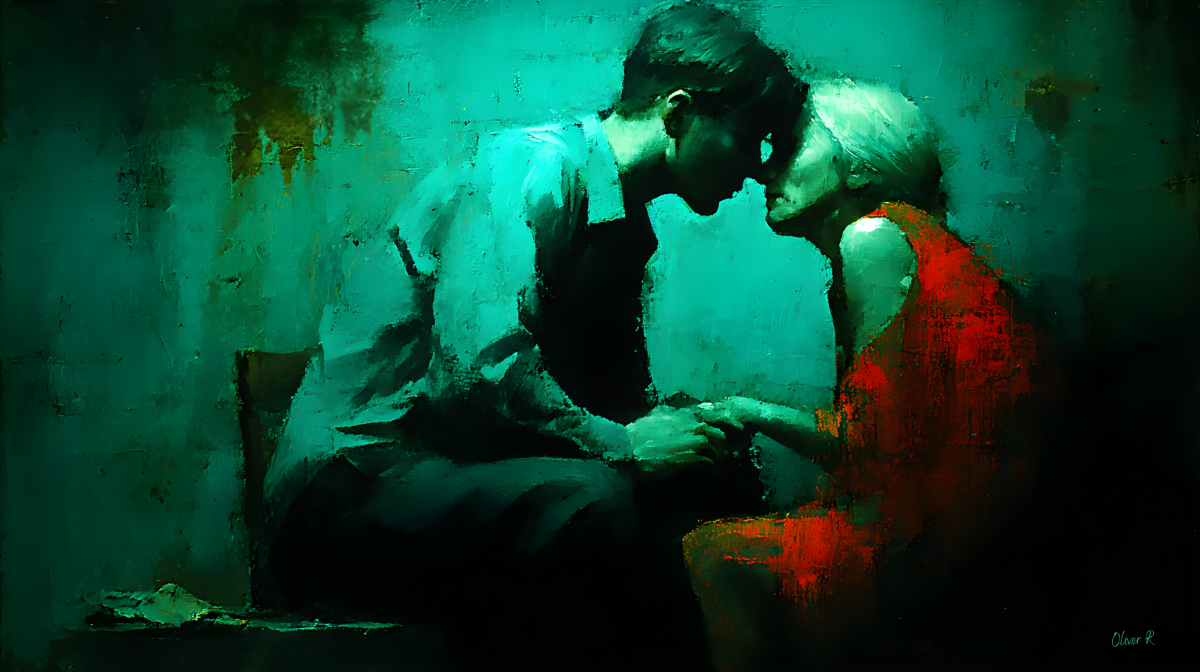
"The power of love" signed by "Oliver R"
“The Power of Love,” the strength of a feeling beyond conventions
In The Power of Love, Oliver R explores a theme rarely depicted without judgment: love between two people whom everything seems to separate. The painting shows a young man and an older woman seated in profile in a dark, worn room. The scene feels intimate, almost suspended in time. The young man, dressed simply in a shirt and trousers, gently holds the woman’s hands. Their faces move closer together, as if they have just kissed or are about to.The woman, with white hair pulled back — perhaps gathered into a discreet bun disappearing at the nape of her neck — wears a red dress. It is difficult to tell whether the dress is worn with age or if it was once an elegant evening dress, short and revealing one shoulder. This detail adds ambiguity to her character, somewhere between past elegance and present fragility.The contrast between the strength of the feeling suggested by their gestures and the somber atmosphere of the room is striking. The space appears aged and neglected, as if the outside world weighs upon this unexpected relationship.Through this painting, Oliver R evokes the powerful and often criticized love between a twenty-five-year-old man and a seventy-year-old woman — an unlikely relationship that exists beyond social conventions. Despite the darkness of the setting, The Power of Love reminds us that the light of love can emerge where it is least expected.
"Inaccessible" signed by "Oliver R"
“Inaccessible”, le mystère silencieux d’Oliver R
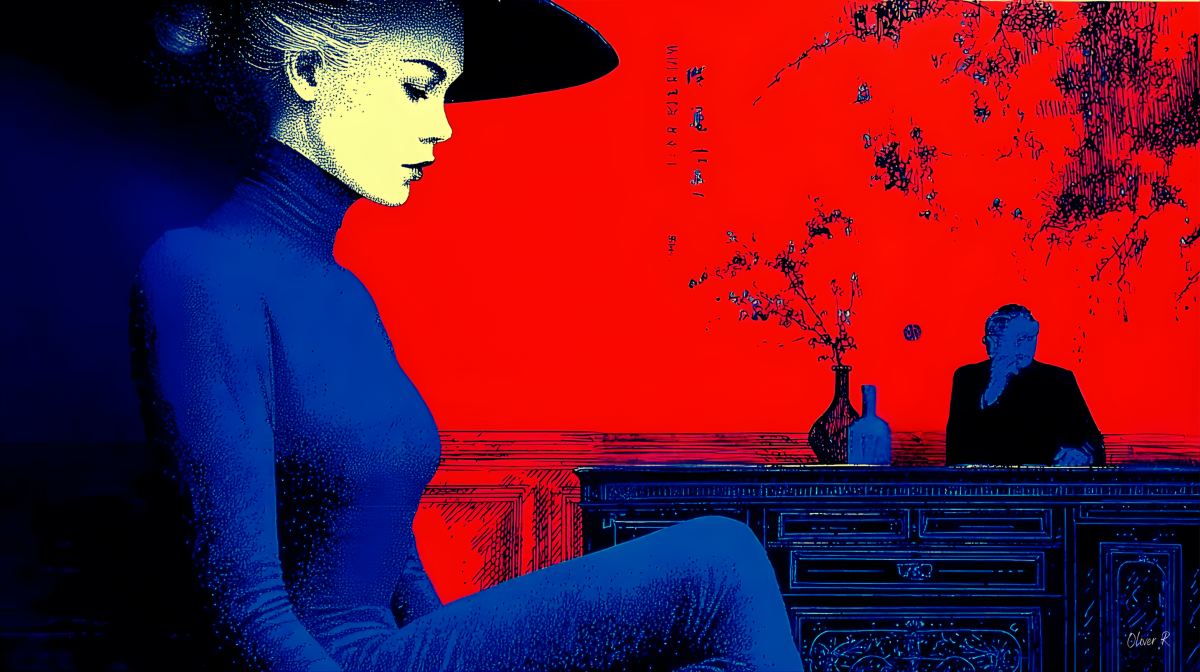
Dans son nouveau tableau Inaccessible, Oliver R met en scène une tension presque imperceptible entre deux présences qui semblent partager le même espace sans réellement se rencontrer. Au premier plan, une femme élégante est représentée de profil. Assise, elle porte une longue robe bleue qui se prolonge jusqu’à un col roulé, accentuant sa silhouette élancée et son attitude réservée. Un chapeau couvre partiellement son visage : seul le bord avant est visible, laissant apparaître un chignon soigneusement noué et quelques mèches de cheveux au-dessus de son oreille. Ses jambes semblent croisées, mais le cadrage serré du tableau ne permet d’en apercevoir que la partie inférieure, sous le genou. Ce choix de composition renforce l’impression de distance et de retenue qui émane du personnage. Dans l’obscurité derrière elle, une nuance de bleu apparaît, comme si la robe diffusait une lueur ou une chaleur discrète qui se propage dans l’espace. Ce halo subtil contraste avec le fond dominé par un rouge profond. Sur ce mur, il est difficile de distinguer s’il s’agit de dessins, de traces ou simplement de marques d’usure venant troubler la surface et atténuer l’intensité de la couleur. À l’arrière-plan se dresse un meuble imposant — peut-être un bar — plongé dans le noir, mais dont les reliefs sont légèrement soulignés de touches blanches. Derrière lui se tient un homme sans visage. Assis, une main soutient son visage tandis que l’autre repose sur le meuble. Sa présence est silencieuse, presque fantomatique. Entre ces deux figures se joue une relation ambiguë : ils semblent s’ignorer, et pourtant tout laisse penser qu’ils sont conscients l’un de l’autre. Inaccessible explore ainsi la distance invisible entre les êtres — celle qui existe même lorsque l’on partage le même espace. Par la composition, les contrastes de couleurs et le jeu d’ombre, Oliver R suggère un dialogue muet où le regard du spectateur devient le véritable lien entre les deux personnages.