Animals serie
A collection of lithographs themed around wild animals using a base of yellow and black colours.
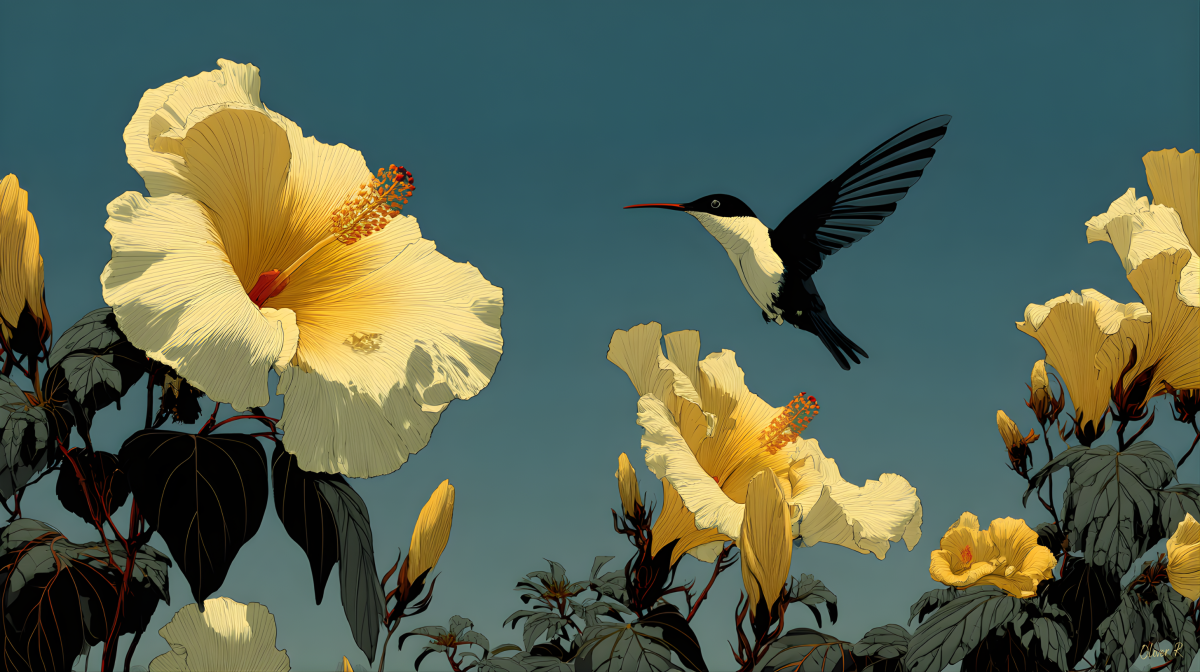
"A hummingbird in flower paradise" signed by "Oliver R"
A hummingbird in flower paradise , The first work in the animal series, this piece is striking for its choice of colors. Yellow and black combine to create a distinctive aesthetic. The bird stands out against the background, and the volume of the flowers is mesmerizing.Three themes emerge from this series: the animal, its environment, and the use of colors to enhance the whole. This work is printed on art paper, placed on a 0.3 cm dibond support, a reinforced frame and protected by 0.5 cm anti-reflective plexiglass. The work is unique and has a digital certificate. We can provide you with an NFT version if you wish.
"A nice cat" signed by "Oliver R"
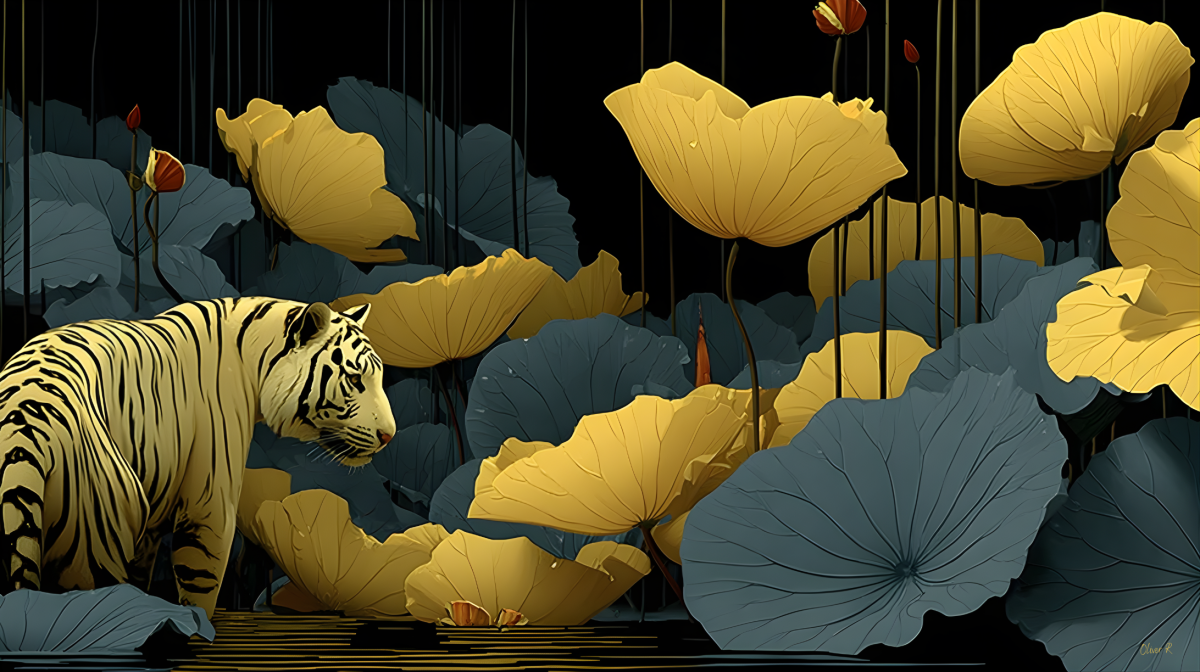
With A Nice Cat, Oliver R invites us to enter a universe that is both wild and dreamlike, where the power of the tiger interacts with the delicacy of an extravagant floral setting. This lithograph depicts a majestic feline moving through a mysterious swamp, surrounded by giant flowers in shades of yellow, blue, and gray. The tiger, the central figure of the composition, commands attention with its intense gaze and calm but vigilant posture. It seems to both belong to and stand apart from this lush environment, as if it were the silent guardian of this surreal landscape. The flowers, disproportionate in relation to the animal, create a striking contrast: their exaggerated size and mixture of cool and warm colors reinforce the fantastical aspect of the scene. Through A nice Cat, the artist offers an implicit reflection on the place of animals in a world transformed by human imagination. The tiger is no longer just a predator: it becomes a symbol, almost an icon, lost in a surreal floral setting that evokes both the beauty and strangeness of nature.
"The gaze of Yogi" signed by "Oliver R"
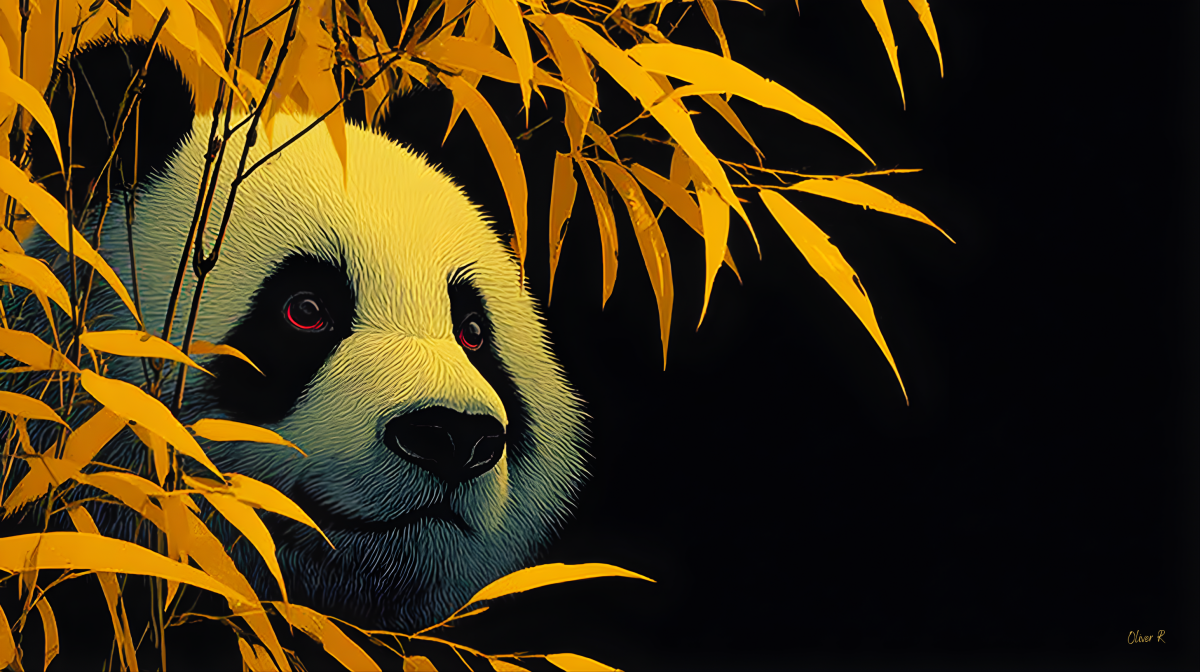
The third work in the Animals series, The Gaze of Yogi by Oliver R. is part of a pictorial approach in which the animal becomes both subject and mirror of human emotion. The painting depicts the face of a panda, partially hidden behind a screen of bamboo, as if seen through a natural and symbolic filter. The yellow bamboo, an unusual and deliberately striking color choice, breaks away from the traditional palette associated with this animal. No longer merely a background element, the bamboo becomes a strong graphic feature that structures the composition and guides the viewer’s eye. This bright yellow creates a visual tension with the panda’s black-and-white face, enhancing the depth and presence of the subject. The right side of the painting, largely dominated by black, introduces an area of shadow that contrasts with the clarity of the bamboo. This dark mass acts as a visual silence, a space for breathing, but also as a zone of mystery. It suggests isolation, contemplation, and the animal’s fragility within its environment. The panda, an emblematic figure of endangered nature, seems to emerge from the darkness to meet the viewer’s gaze. Within the Animals series, The Gaze of Yogi holds a particular place as the third painting: it marks a transition toward a more introspective representation of the animal. While the series explores the strength and beauty of living beings, this work places greater emphasis on the gaze, the true emotional anchor of the composition. The panda is not merely observed; it looks back. Through this play of contrasts between light and darkness, between nature and abstraction, Oliver R. offers a vision of the animal world that is both poetic and unsettling. The Gaze of Yogi is not simply a portrait, but an invitation to slow down, to sustain that gaze, and to reflect on our relationship with the living world.
"Oscar Rhinocéros" signed by "Oliver R"
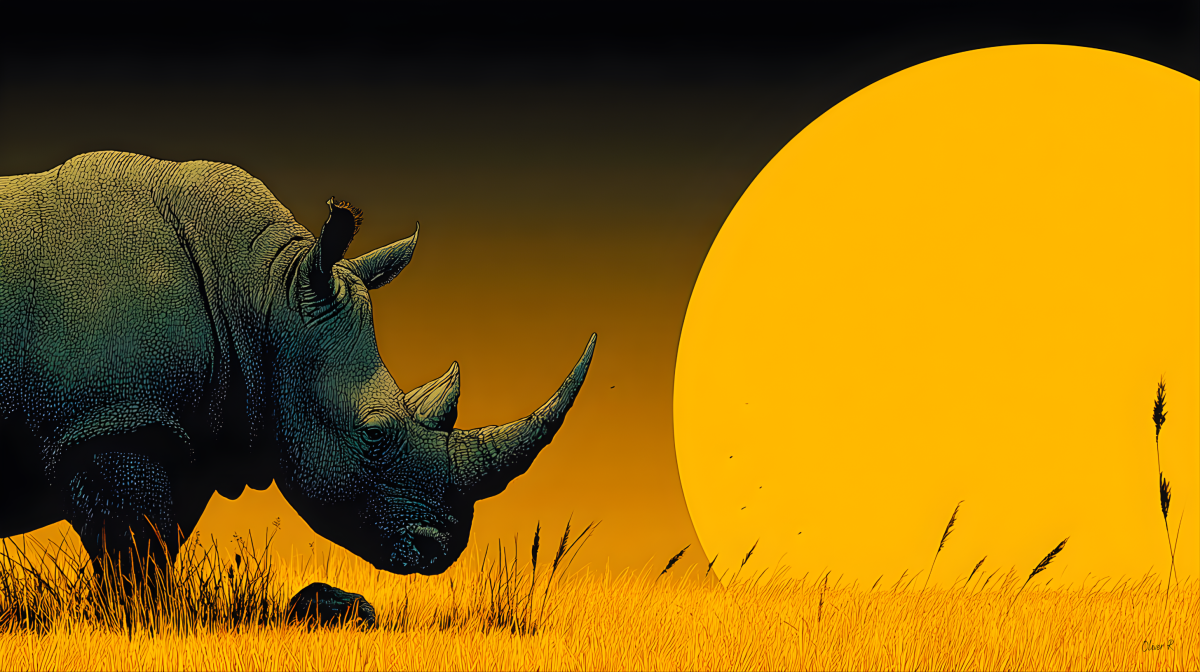
The fourth work in the animal series, Oscar Rhinoceros by Oliver R, represents the strength of the rhinoceros but also its peacefulness in this empty plain, making this force of nature sympathetic and endearing. Oscar is a friend. Oscar Rhinoceros, a Work Between Animal Strength and Landscape Poetry With Oscar Rhinoceros, Oliver R continues his sensitive and graphic exploration of the animal world through his Animals series. This painting stands out for its bold composition, in which the main subject, a rhinoceros, is only partially depicted: only the front half of the animal appears on the left side of the canvas. This framing choice immediately creates visual and symbolic tension, inviting the viewer to imagine the missing part and mentally complete the scene. The rhinoceros, massive and powerful, seems to emerge from outside the frame. Its partial presence reinforces the idea of movement and mystery, as if it were slowly entering or leaving the landscape. This deliberate fragmentation of the animal enhances its expressive power and gives it an almost monumental dimension, despite the absence of its entire body. The rest of the painting opens onto a vast savannah plain dominated by warm yellow tones. This luminous expanse evokes African heat, golden dust, and the silent immensity of wild landscapes. At the heart of this solar atmosphere rises a large, intensely yellow rising sun, which becomes a secondary focal point in the composition. Its unusual size strengthens the impression of a dawning day, a fragile moment when nature seems suspended between night and morning. The sky and the horizon are treated with a gradient shifting from bright yellow to deep black starting from the ground. This chromatic transition conveys the gradual passage from darkness to light, suggesting the end of night and the arrival of day. It also creates a striking contrast with the clarity of the sun and the solid presence of the rhinoceros, reinforcing the dramatic quality of the scene. Through its title, Oscar Rhinoceros, Oliver R subtly humanizes the animal by giving it a first name, establishing an emotional connection between the viewer and the creature depicted. The rhinoceros is no longer merely a symbol of brute strength, but becomes an individual, almost a character, carrying a silent story within the savannah. This work lies at the crossroads of figuration and poetic evocation. It does not seek to faithfully reproduce a real landscape, but rather to convey an atmosphere, an emotion, and a sense of presence. Oscar Rhinoceros thus appears as a visual reflection on the coexistence between the animal and its environment, between earthly power and celestial light. By combining an asymmetrical composition, a palette dominated by yellows, and a strong contrast between shadow and light, Oliver R creates a work that is both powerful and contemplative
"The bear's mirror" signed by "Oliver R"
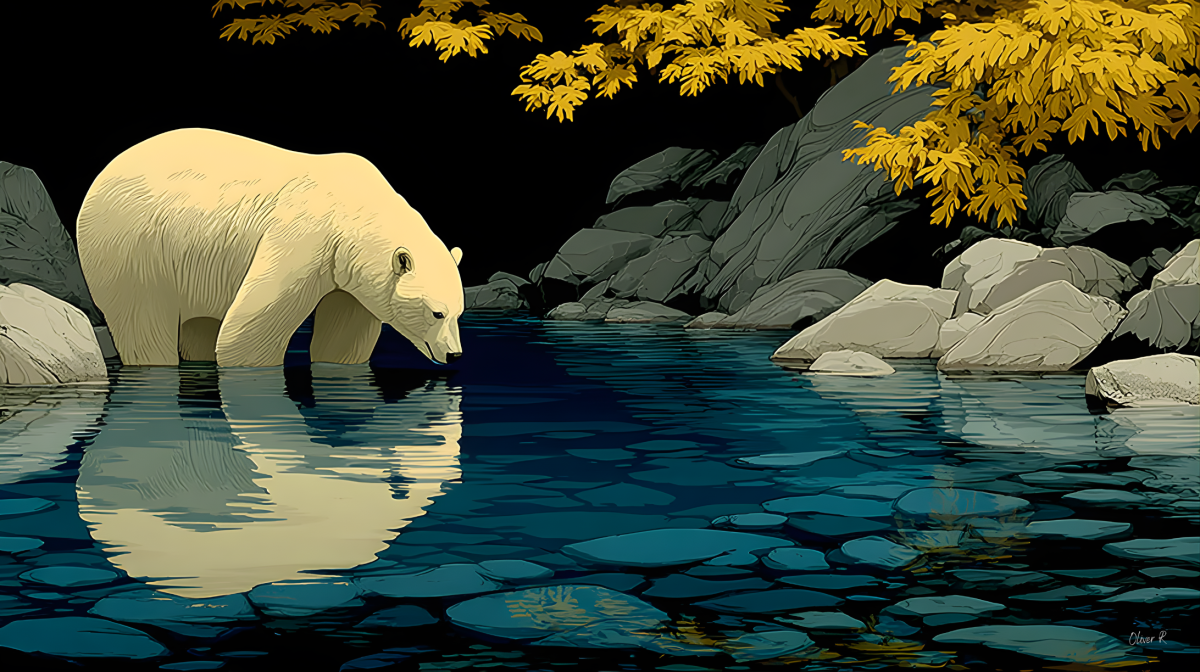
"The bear's mirror" signed by "Oliver R". With this lithograph-style work from his Animals series, Oliver R presents a scene that is both peaceful and strongly structured around a simple motif: a bear standing in a river of crystal-clear water. The composition is distinguished by the transparency of the water, through which the rocks on the riverbed are visible. This clarity gives the scene great visual depth and enhances the impression of calm and stillness. The bear stands in the river and gazes into the water. Its posture suggests waiting and concentration, as if it were watching for an invisible movement or prey. Its light coloring, close to that of the rocks surrounding and lining the river, creates a subtle chromatic harmony between the animal and its environment. This closeness of color partially blurs the boundary between the living and the mineral, giving the bear an almost sculptural appearance, integrated into the landscape. In the upper part of the composition, a few tree branches appear, adorned with golden leaves. These luminous touches introduce a seasonal and poetic dimension, evoking autumn and the slow transformation of nature. They contrast with the mineral sobriety of the river and draw the eye upward, balancing the massive presence of the bear. The background of the painting, representing the horizon, is treated in deep black. This bold choice does not plunge the scene into darkness; on the contrary, it enhances the brightness of the water, the rocks, and the animal’s light fur. Black acts as a graphic frame that makes each element stand out, giving the scene an almost theatrical atmosphere in which the bear becomes the protagonist of a suspended moment. The lithographic style reinforces this sense of controlled composition. The forms are clear, the contrasts deliberate, and the reduced palette gives the work strong visual readability. Oliver R does not seek an abundance of detail but favors a clear and symbolic reading of the scene: the animal facing the water, stillness facing movement, light facing shadow. This work fully belongs to the Animals series, in which each painting stages an encounter between an animal figure and a stylized environment. Here, the bear appears as a silent, almost meditative presence, embodying an intimate relationship with nature. The scene is not strictly narrative but suggests an implicit story, a moment of solitude and observation in the heart of the landscape. Through this balanced composition between mineral, vegetal, and animal elements, Oliver R offers a vision of the wild world that is both graphic and contemplative. The painting invites the viewer to pause, to follow the bear’s gaze into the clear water, and to enter a space of silence and light where nature seems frozen in an eternal moment.
"The unloved" signed by "Oliver R"
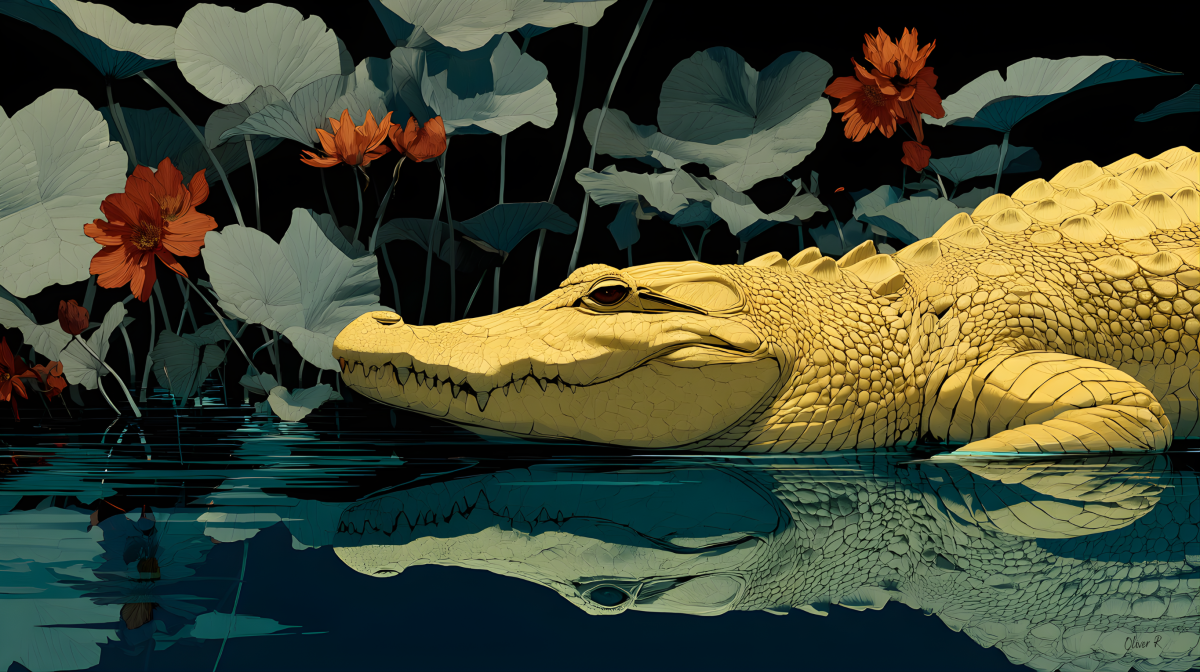
7th painting in the Animals series by Oliver R In The Unloved, the seventh work in the Animals series, Oliver R presents a singular and unsettling depiction of a crocodile, an animal usually associated with power, danger, or indifference. Here, the figure is shown half front-facing, slightly in profile toward the right side of the canvas. The reptile’s body, painted in a pale yellow that appears almost fragile, contrasts sharply with the usual image of this predator. It lies hidden in a marsh, as if trying both to conceal itself and to protect itself. The composition is built on a subtle interplay between presence and reflection. One of the crocodile’s legs is half immersed in the water, creating a direct link between the solid world and its aquatic double. The reflection of the animal on the water’s surface reinforces this sense of duplication: what we see is not only a body, but also a fragile, unstable image, almost uncertain. The dark, open eye of the crocodile seems to question the viewer, suggesting a painful awareness of its own condition. The surrounding vegetation plays a full role in establishing the atmosphere of the painting. The background is composed of large gray-blue leaves with broad, enveloping shapes that create a cool, silent setting around the animal. A few red flowers appear like bursts of life within this muted environment. Their partial reflection in the water introduces visual rhythm and additional depth, while emphasizing the contrast between stillness and movement, reality and illusion. The title The Unloved sheds light on the symbolic reading of the work. The crocodile, often perceived as a fearsome and unworthy creature of empathy, is here humanized through its posture and the unexpected softness of its color. Its isolation in the marsh, combined with the fixed intensity of its gaze, evokes a form of loneliness. It is no longer merely a predator; it becomes a marginal figure, rejected or misunderstood, confined within its own territory. Thus, this work goes beyond simple animal representation to offer a reflection on otherness and rejection. Through this pale yellow crocodile, Oliver R seems to invite the viewer to reconsider those creatures—and perhaps those beings—that are too quickly labeled as hostile or undeserving of love. The Unloved emerges as a silent yet powerful image, where nature becomes the mirror of a human emotion: the feeling of being seen, but rarely understood.
"The panther comes down to town" signed by "Oliver R"
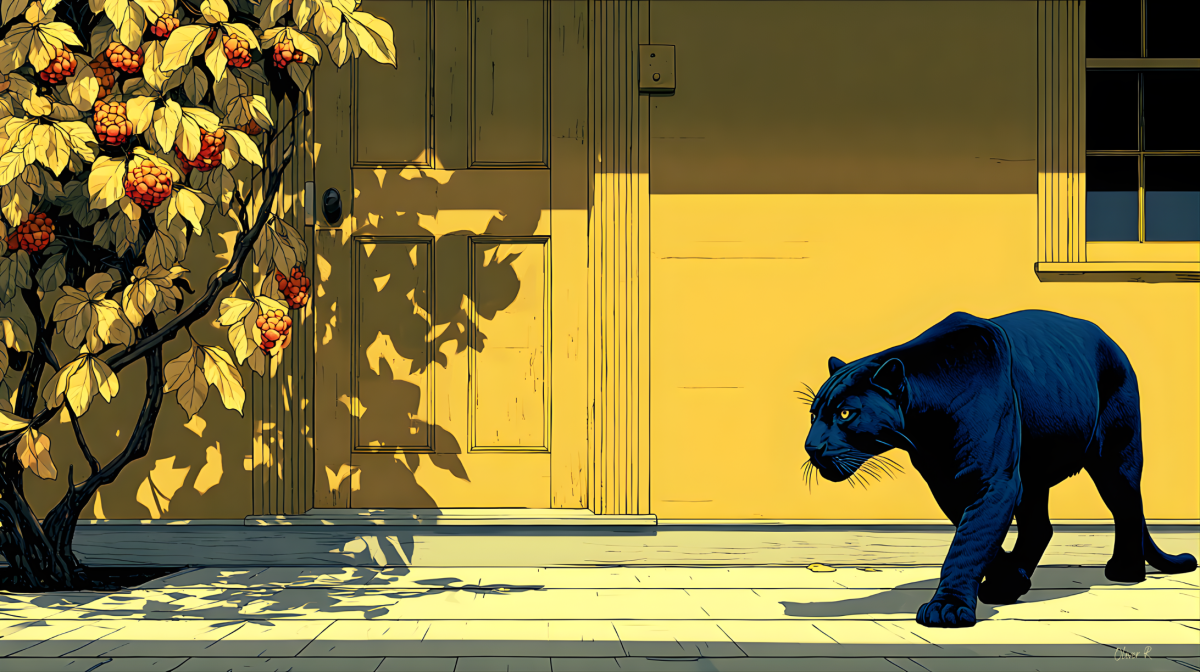
In The Panther Comes Down to Town, a work from the Animals series by Oliver R, the artist stages an unlikely encounter between the wild and the urban. The composition is simple yet charged with poetic tension: on the right, a black panther walks along a house with a bright yellow façade. The sunlight strikes this wall directly, shaping the space through a clear play of shadows—first that of the animal, stretched along the ground, but also the shadow of the roof overhang and that of a shrub visible on the left. These shadows become almost characters in their own right, drawing a silent geometry that contrasts with the fluid movement of the feline body. The palette is dominated by yellow, a warm, solar color that evokes both light, life, and a sense of strangeness. The yellow leaves and the slightly red fruits add a subtle vibration, like heartbeats within a frozen scene. The deep black of the panther stands out sharply against this luminous dominance: it absorbs light rather than reflecting it, becoming an immediate focal point for the viewer’s eye. This chromatic contrast reinforces the impression of an animal out of place, almost unreal within this domesticated environment. The panther appears to be wandering, head lowered, alert, as if following an invisible trail. Is it lost, torn from its natural territory, or is it searching for something specific? This ambiguity lies at the heart of the painting. It invites a symbolic reading: the animal may embody instinct in an ordered world, freedom against human architecture, or the intrusion of the wild into our everyday landscapes. The artwork offers no clear answer, but instead raises a question: what does nature do when it enters the city? It observes, it searches—and perhaps… it is searching for us as well.